
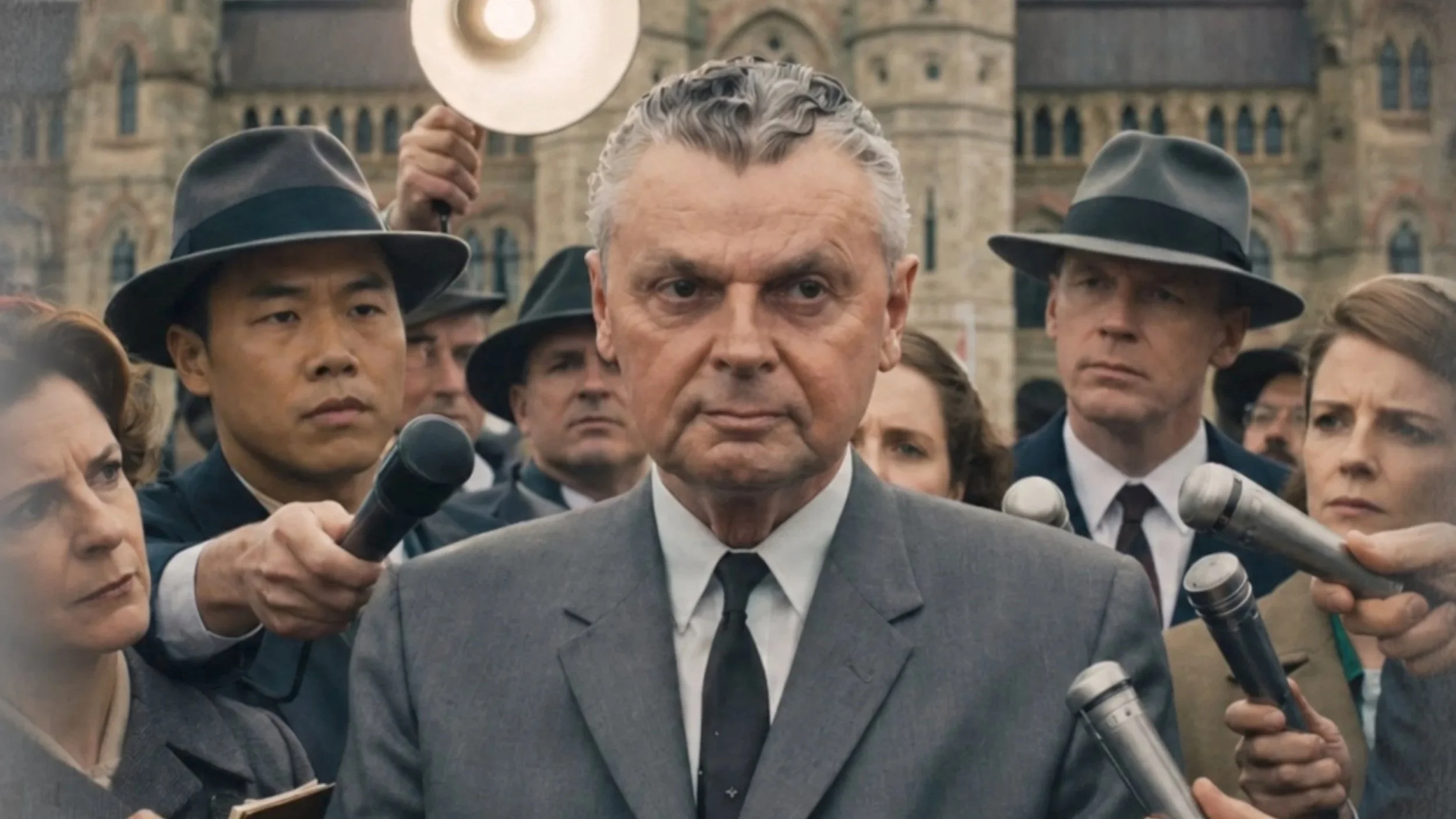
A dramatic retelling of the life of Canada’s 13th Prime Minister.
Based on One Canada, the memoirs of John Diefenbaker.
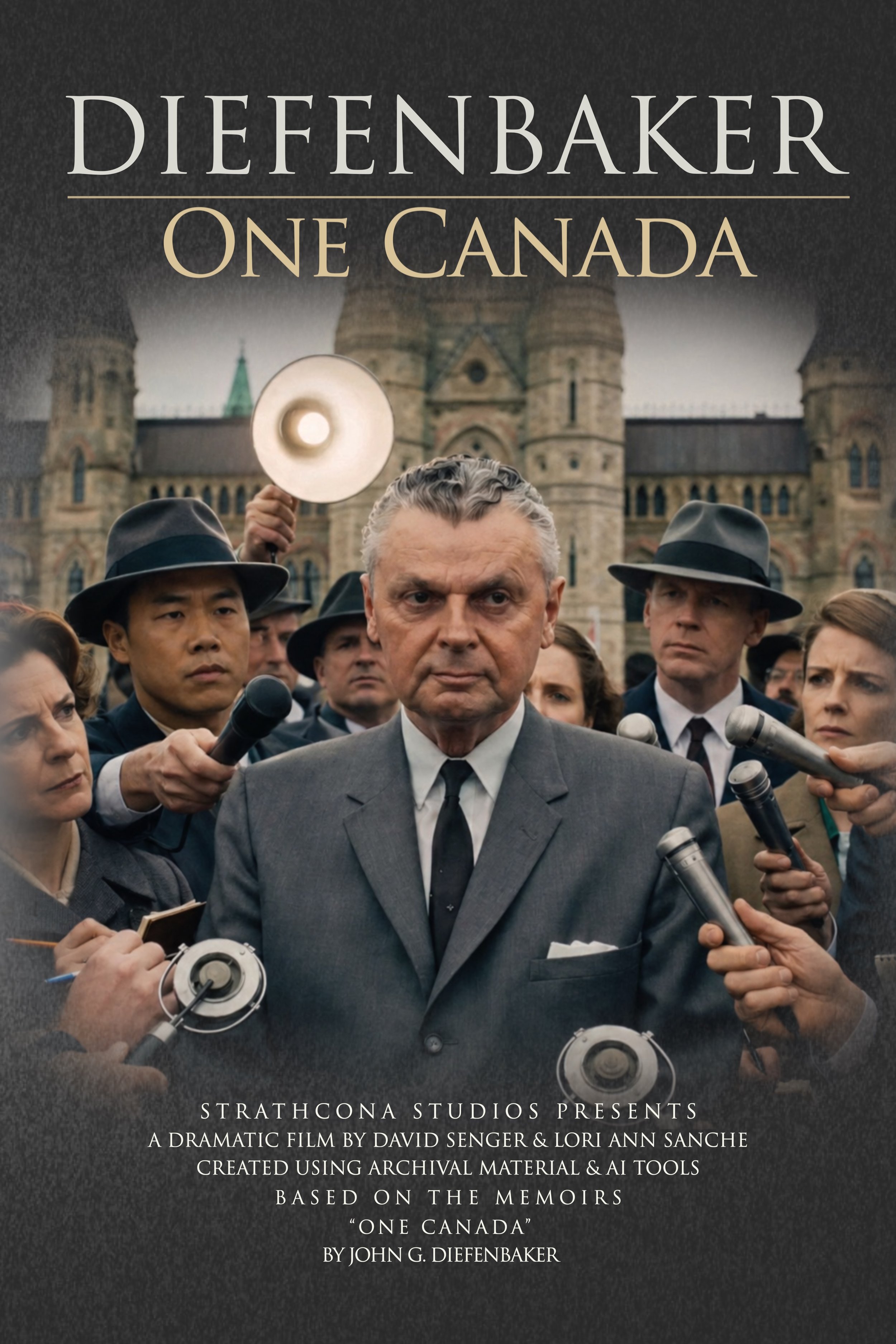
A Canadian historical film about courage, conviction, and conscience.
Diefenbaker: One Canada will be a feature-length historical drama based on the life and legacy of John Diefenbaker—Canada’s 13th Prime Minister and champion of the Canadian Bill of Rights.
With a character-driven, cinematic approach, the film follows Diefenbaker’s journey from his modest prairie beginnings through personal hardship and political struggle to his rise as a national leader. Guided by a deep moral compass and a fierce belief in the rights and dignity of ordinary Canadians, his story is one of conscience over convenience.
The film explores defining moments of his leadership—from bold domestic reforms to high-stakes international tensions—revealing a leader whose convictions challenged the powerful and helped shape the country.
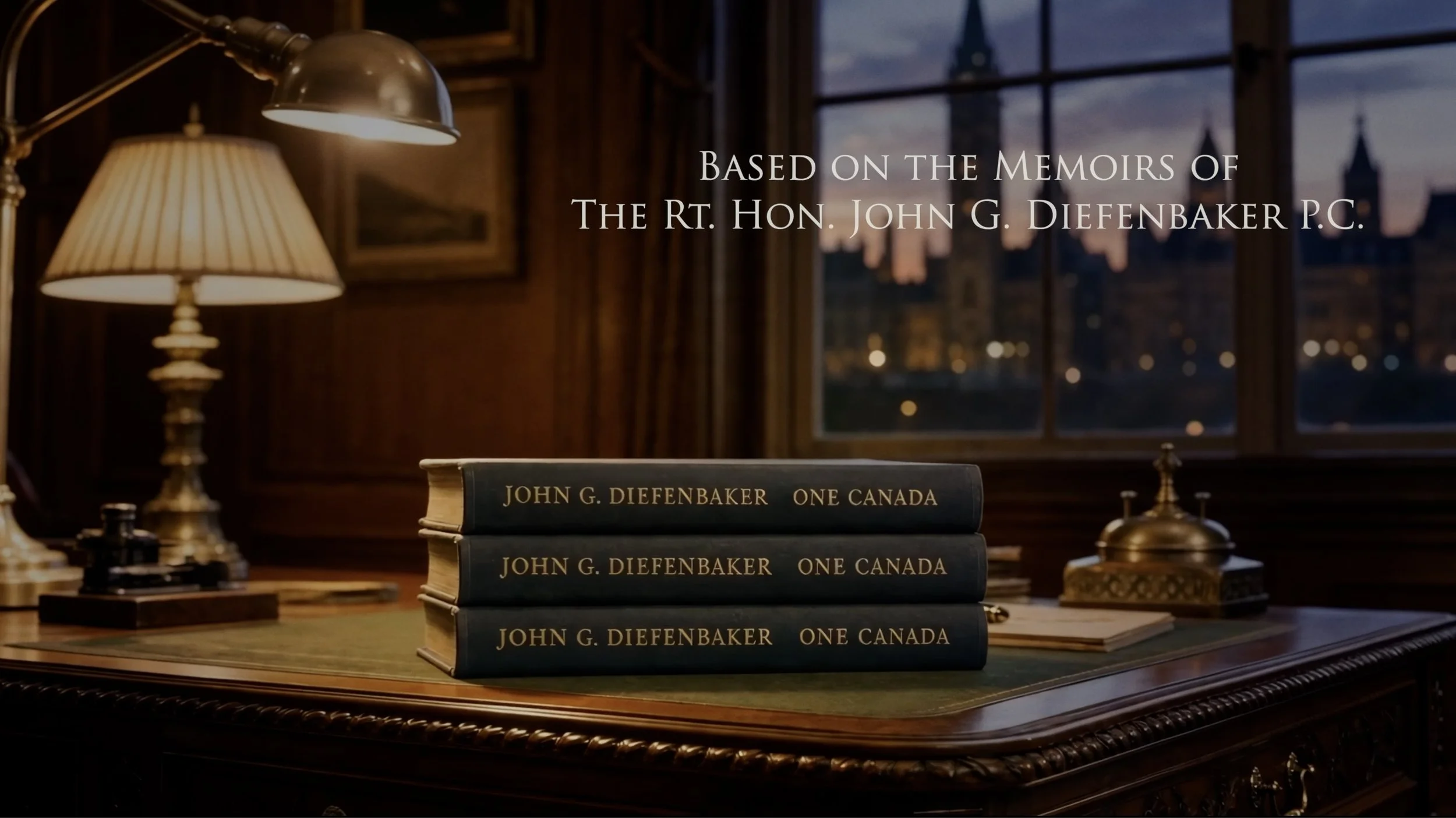
Drawing significantly from Diefenbaker’s memoirs One Canada, and grounded in historical records, the project blends documentary-level authenticity with dramatic storytelling.
Using modern AI filmmaking tools alongside archival inspiration, we are developing a new approach to bringing Canadian history to life on screen.
This evolving concept trailer explores the dramatic through line of Diefenbaker: One Canada while showcasing Strathcona Studio’s developing visual approach.
It brings together material created across different stages of production to present the film’s tone, scope and direction as the project continues to evolve.
Further updates will be added as production progresses — check back soon for the latest version.
Watch the concept trailer
Watch a sample scene
Step inside our filmmaking process with these sample scenes (in development).
A young John Diefenbaker sails into an uncertain future on his 1916 First World War voyage following enlistment.
One of the film’s most ambitious sequences yet, it was brought to life through a high level of technical skill and cinematic design.
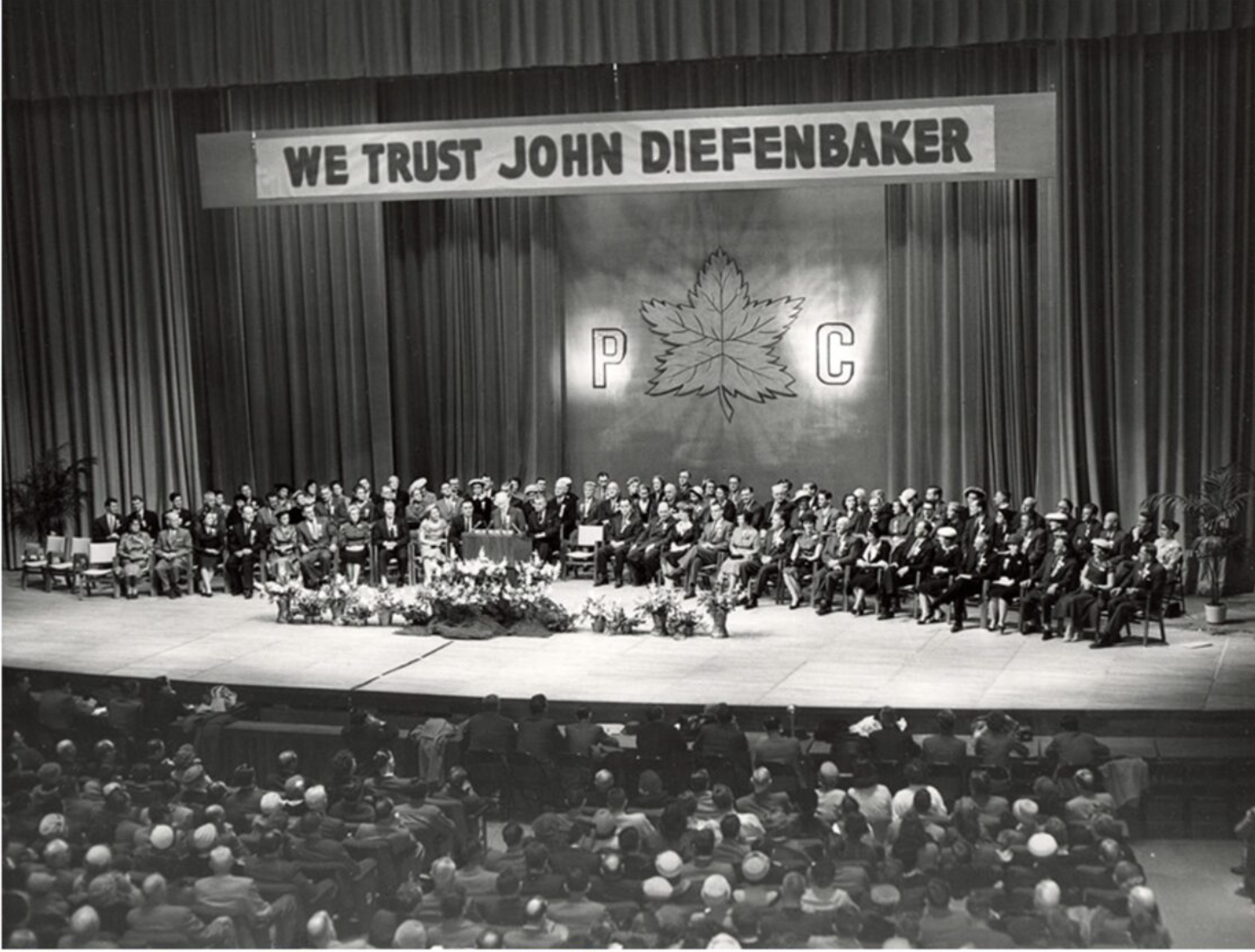
This scene captures the tension leading into the 1956 Pipeline Debate, one year before he became Prime Minister.
It also features how we’re blending archival material with AI tools to bring Canadian history to life in a new way.
Why AI-assisted filmmaking?
This is a key question, and one central to our work at Strathcona Studios. Here are our answers.
Many historical Canadian stories never reach the screen.
Large-scale historical films are expensive to produce, especially for independent filmmakers. Stories set in past eras often require enormous resources to recreate. Yet these stories need to be told.
AI helps make the impossible possible.
We use AI-assisted filmmaking as a creative tool to help bring important Canadian stories to life. As with live action films, every scene requires research, writing, directing, editing, and artistic judgment.
AI technology can help transform archival materials into cinematic experiences in a cost-effective way.
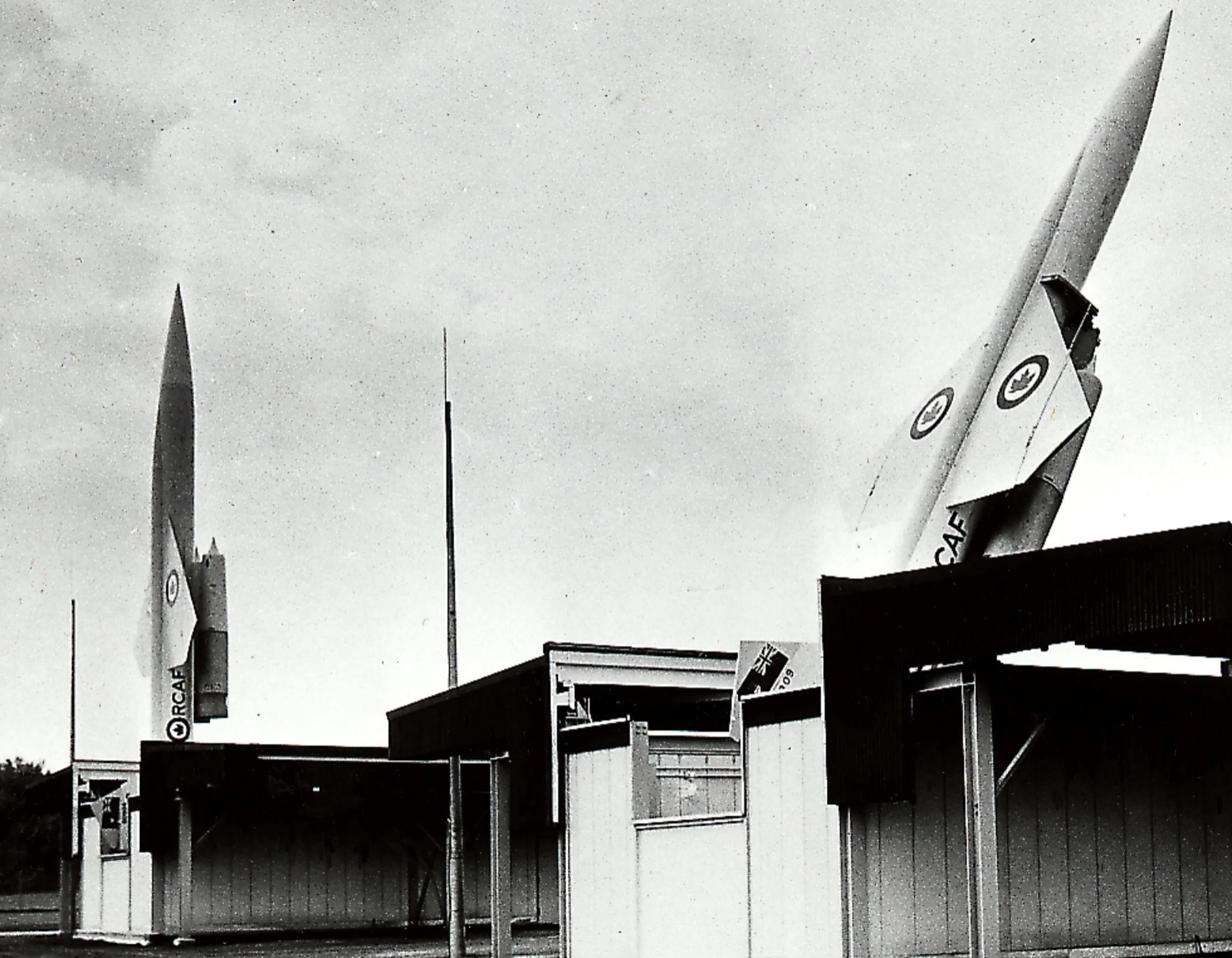
For example, the video clip shown here was created using a historical photograph of the Bomarc missile installation at North Bay as its foundation.
What about portraying emotion?
A common question about AI-assisted filmmaking is whether it can convey real human feeling.
For us, this scene is genuinely moving — and we invite you to judge for yourself whether the emotion comes through.
Grounded in the records.
Every scene in Diefenbaker: One Canada is being built from historical sources: speeches, memoirs, biographies, archival records, newspapers, photographs, and contemporary accounts.
Where a line, event, or political position comes directly from the record, we will identify the source. This will include where we make an artistic judgement — for example, placing a documented visit immediately after a documented speech for dramatic continuity — we will say so plainly.
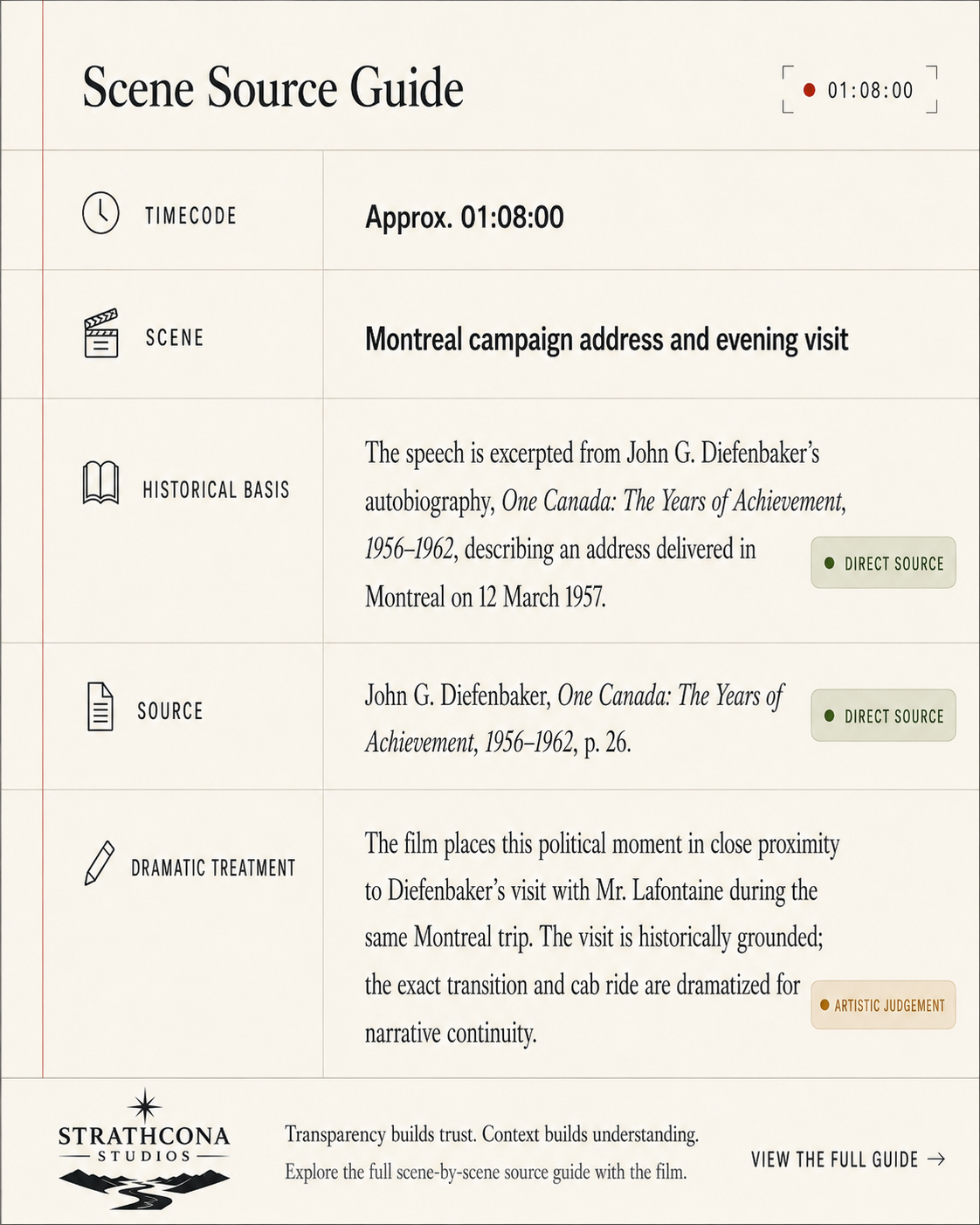
Our goal is not simply to recreate the past, but to let audiences see how the story was built. For viewers who ask, “Did that really happen?” we want the answer to be easy to find.
In that spirit, the film will include a companion scene-by-scene source guide: part endnotes, part production journal, and part invitation to explore Canadian history more deeply.
Contribute to the Film
Diefenbaker: One Canada is being developed independently by Strathcona Studios.
If you’d like to be part of bringing the film to the screen, you can choose from four contribution levels, each offering something from the project in return.